
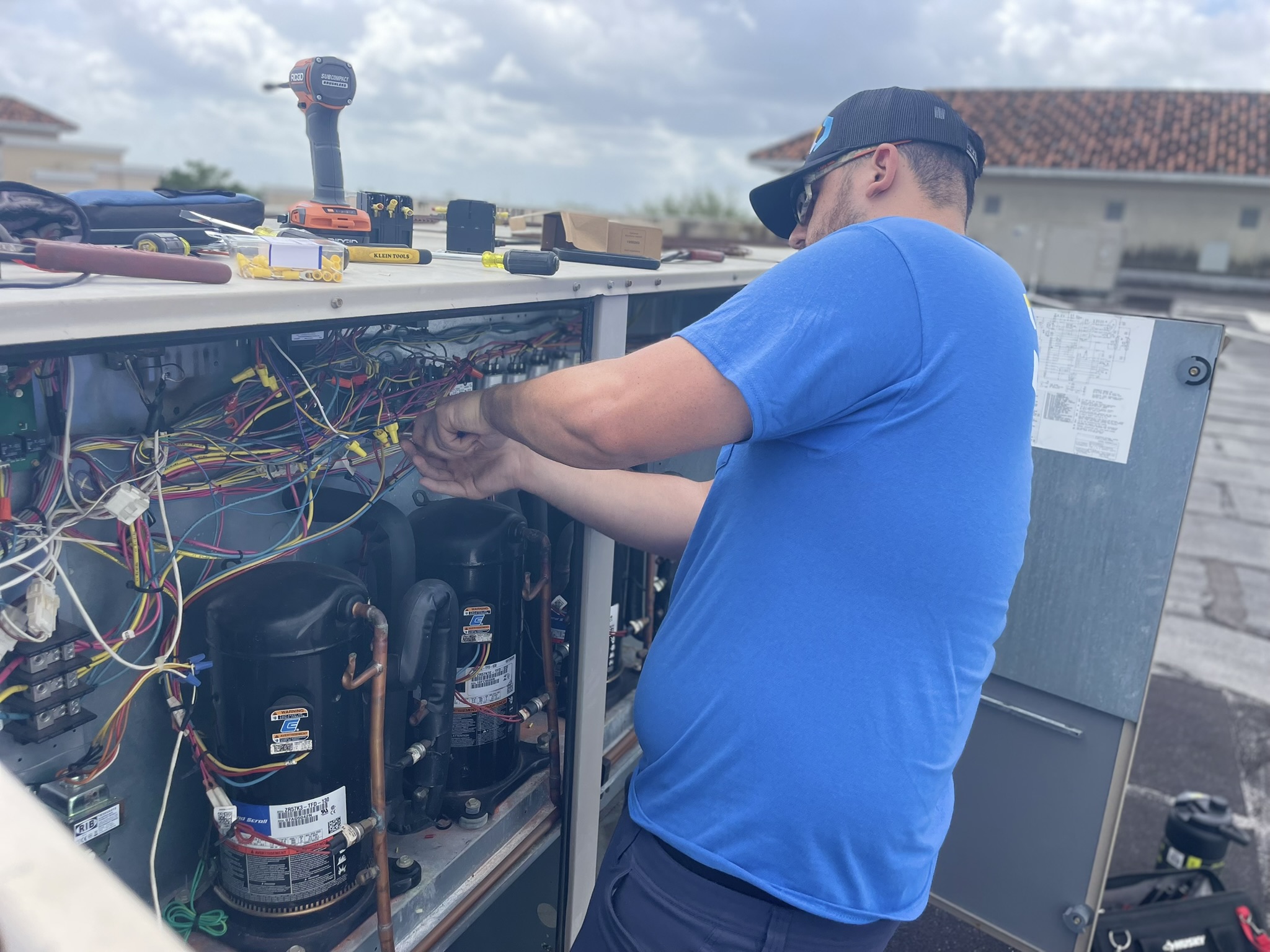
A failing AC capacitor is one of the most common reasons an air conditioner hums, runs weak, or will not start. The capacitor stores electrical energy to help the compressor and fan motor get moving. When it wears out, the system struggles, and it can quit in the middle of a hot Florida afternoon. A trained technician should test and replace it.
Capacitors sit inside the outdoor unit near the compressor and fan motor. They are simple parts, but they can hold a dangerous electrical charge even when the power is off. Florida heat puts extra stress on these parts. That is why failures show up so often in Palm Bay, Melbourne, and nearby areas during the hottest months of the year.
Common Signs of a Bad Capacitor
The most common sign is a humming sound from the outdoor unit. The fan may not spin at all, or it may start slowly and then stop. Some systems turn on, then shut off after a few seconds. You might also notice weak cooling or warm air coming from the vents.
Another sign is a delayed start. You adjust the thermostat, wait, and hear clicking before anything happens. Sometimes the unit tries to start several times in a row and then gives up. A bulging or leaking capacitor is a clear warning. If you see one, shut the system off and call for service.
Why Capacitors Matter So Much
A capacitor gives the compressor and fan motor the extra push they need to start. Without that push, the motors draw heavy current and strain to turn. Over time this strain can shorten the life of the motors too. A weak capacitor can cause damage that goes far beyond the cost of the part itself.
Many homeowners do not realize that a capacitor can fail slowly. The unit may still run for weeks while it loses strength. Heat is the main cause. Hot outdoor temperatures, long run times, and power swings all speed up wear.
Check the Basics Before You Call
Some simple checks can help you describe the problem clearly. Make sure the thermostat is set to cool and the set point is below the room temperature. Check that the indoor air filter is clean. Look at the outdoor unit to confirm the fan is not blocked by leaves, debris, or a fallen branch.
Do not open the outdoor unit's electrical panel or touch any wiring. Turn the system off at the thermostat, then at the outdoor disconnect if you can reach it safely. Stay away from the capacitor itself. Even with the power off, a capacitor can keep a charge for a while.
What a Technician Does on the Call
A technician starts with a full look at the system. They check voltage, look at the fan and compressor readings, and test the capacitor with the right meter. The capacitor has a rated value printed on its side. The test shows whether the real reading falls within the normal range. A part that reads low or out of range gets replaced.
The technician also looks for the cause. A failed capacitor can come from heat, a failing motor, a low refrigerant charge, or electrical trouble. Replacing only the capacitor fixes the symptom, but not always the problem. A good technician checks the rest of the system before closing the panel.
Why Matching the Part Matters
Capacitors come in different ratings. The microfarad value and voltage must match the original part, or the motor may not run correctly. A replacement that is too small can fail quickly. One that is the wrong type can damage the motor. Matching the rating is one reason this repair belongs with someone who carries the right parts.
Technicians also make sure the new capacitor is wired the right way. Wiring errors are easy to make on a dual-run capacitor, and they can cause the fan or compressor to run hot. Careful wiring protects the motors and gives the system a good start.
Can I Wait Until Later?
Waiting is a risky choice in South Florida. A weak capacitor can leave you without cooling on the hottest day of the year. A prompt repair often prevents a bigger failure later, especially when the strain has already started to affect the motors.
If the unit is still running but sounds unusual, do not keep pushing it. Continuing to run a struggling system can turn a small repair into a larger one. Shut the system off at the thermostat and schedule service.
Preventive Maintenance Helps Catch Problems Early
A regular tune-up is the best way to find a weak capacitor before it fails. During a maintenance visit, a technician checks electrical connections, measures capacitor values, and watches how the motors start. Early readings give a clear picture of how much life the part has left. You can learn more about our AC maintenance and tune-up visits.
Regular service helps in other ways too. Clean coils move air better and reduce strain on the motors. Clear drain lines and fresh filters keep the system running in balance. Homes along the Space Coast and the Treasure Coast see salt air, sand, and humidity, and these conditions make regular checks even more useful.
When to Call CoolWave
If your unit is struggling right now, our AC repair team can diagnose the problem and explain your options. CoolWave offers 24-hour service for homes and businesses across Brevard, Indian River, and St. Lucie counties. We handle AC repair, maintenance, installation, commercial refrigeration, ductless mini-splits, and pool heaters.
Do not wait for the unit to fail completely. Call CoolWave at 888-922-8966 if your AC is humming, not starting, or blowing warm air. We serve Palm Bay, Melbourne, Vero Beach, Port St. Lucie, and nearby communities. Call for an estimate on repair or replacement, and we will explain your choices in plain language.
Frequently Asked Questions
What does a bad AC capacitor sound like?
A humming sound from the outdoor unit is a common sign. The fan may also start slowly, stop, or not spin at all. Turn the system off and call for service if you hear these sounds.
Can a homeowner replace an AC capacitor?
Capacitors can hold a dangerous charge even when the power is off. This repair should be done by a trained technician who can test the part and match the correct rating.
Why does a capacitor fail in Florida?
Heat is the main cause. Hot outdoor temperatures, long run times, and power swings all add wear. Regular maintenance helps catch weak parts before they fail.
Should I replace the capacitor or the whole AC?
That depends on the age of the system and what the technician finds. A capacitor replacement is often the right fix, but the whole system should be checked to find the cause.