
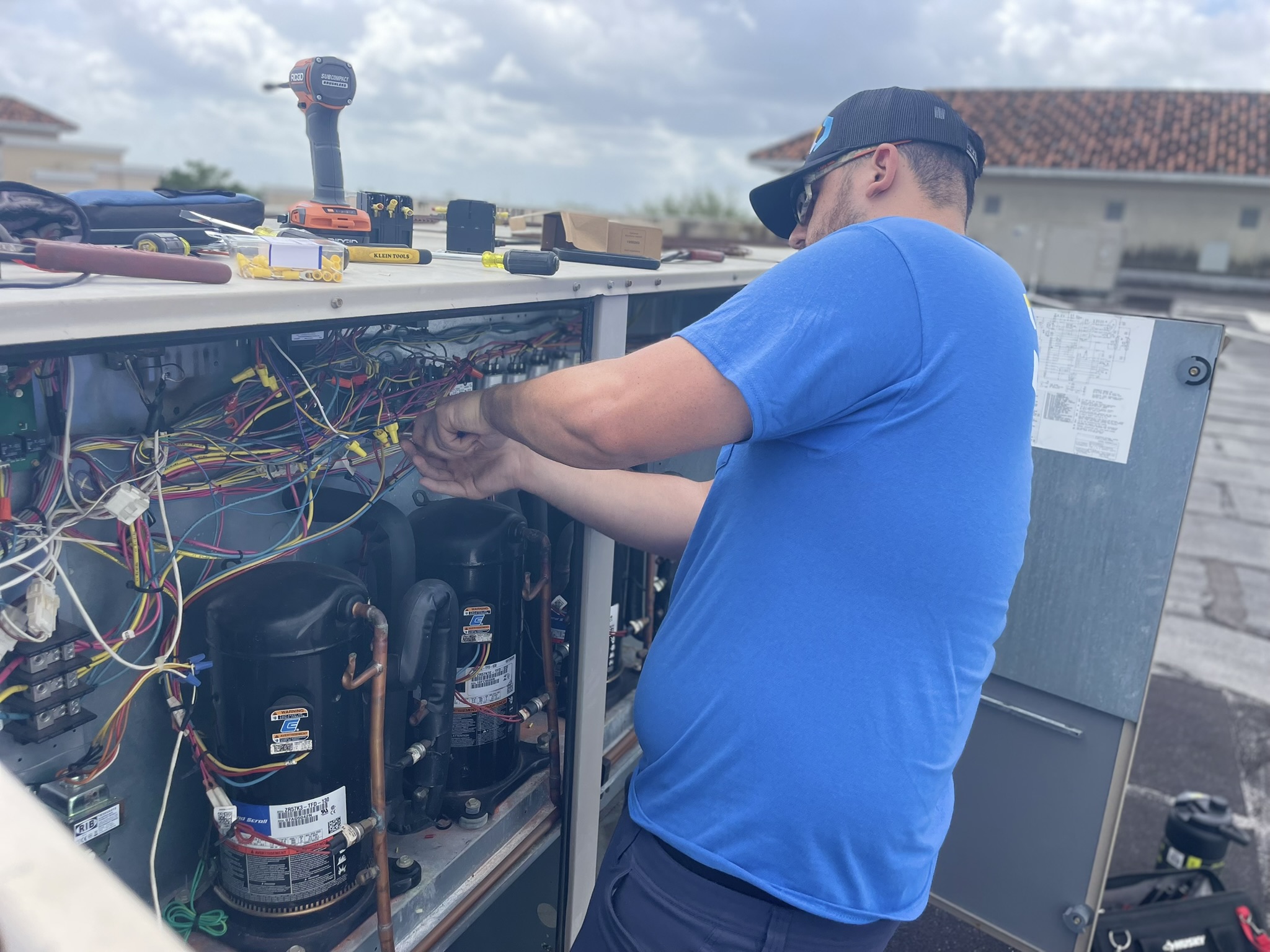
Before an AC installation in Palm Bay, check two things: local permit rules and any homeowners association (HOA) approvals. Permits cover the work itself, while HOA rules often control where an outdoor unit can sit and how it looks. Settling both early helps your install move forward without avoidable delays.
Why Permits Matter for an AC Install
Replacing or adding an air conditioning system is more than swapping equipment. The job often involves electrical connections, refrigerant lines, condensate drains, and changes to ductwork. Many local areas require a permit for this type of work so an inspector can confirm the installation meets code. Permit rules can vary by city and county, so the safest starting point is the building department for your address. Ask whether a permit is needed for your exact project before the install day is set.
Who Handles the Permit Application?
Ask your installer who submits the permit application. Some contractors include this step in their process, while others expect the homeowner to sign off on the paperwork. Get the answer in writing. A clear plan prevents delays when the inspector needs to schedule a visit. Also ask which documents will be needed, such as equipment specifications and load calculations. Knowing the steps ahead of time makes the schedule easier to follow. If the installer says no permit is needed, ask them to note that in writing too, so you have a record if questions come up later.
What an HOA Controls
A homeowners association, or HOA, sets rules for the look and placement of homes in a community. Many HOAs control things like fences, exterior paint colors, and outdoor equipment. An outdoor condenser is often on that list. Even when your city does not require approval, your HOA may. Read your community's governing documents and ask the management office what they review before work begins.
Where the Outdoor Unit Can Go
Placement is the part of the install that HOAs care about most. Units are often placed on a side or rear wall, on a concrete pad, or in a spot hidden from the street. Placement also affects performance. The unit needs clear airflow on all sides, a level base, and enough room for service. A spot that is too tight makes maintenance harder for a technician and can reduce how well the system runs. Ask your installer to walk the site with you before you submit any HOA request. Take photos of the proposed spot from the street and from the yard. Those images can help you explain the plan clearly.
What the HOA Request Usually Needs
An HOA request often needs a site drawing or a photo with the unit location marked. Your installer may need to provide the make, model, and size of the new condenser. Have those details ready before you apply. If the new equipment is larger than the old unit, say so in the request. Reviewers often want to know whether the install will change how the home looks from the street or from a neighbor's yard. If the request is denied, ask what change would meet the rule, such as a different spot or a screen that blocks the view. A calm, specific request usually moves faster than a general one.
Timing Your Install
Review times vary. An HOA board may meet only once a month, and a building department may need several business days to review a permit. Build that time into your plan. Summer is a busy season for cooling work, so a failed unit can leave a home without air conditioning while the paperwork moves. If your system is struggling, tell your installer right away so approvals can start early. Homeowners in Palm Bay, Melbourne, and nearby towns should check both city and county rules.
Questions to Ask Before You Sign
A short list of questions can save time and frustration. Use these with any installer you are considering:
- Is a permit needed for this install, and who applies for it?
- What documents will the HOA or building department need from me?
- Where will the outdoor unit sit, and how was that spot chosen?
- Does the quote include the drain line, electrical work, and removal of the old unit?
- Who will be my contact if the inspector or HOA asks for changes?
Keep Records for Your Home
After the install, keep copies of your permit, inspection notes, and HOA approval letter. Store them with your equipment paperwork. These records help during a home sale, a refinance, or a future repair. They also make it easier to answer questions from a neighbor or an HOA board member.
Planning Your Palm Bay AC Install
Once the permit and HOA questions are answered, you are ready to plan the install itself. Review our AC installation services to see the types of systems we install. A careful plan helps the work go smoothly for you and your neighbors.
CoolWave Air Conditioning and Refrigeration is based in Palm Bay and serves Melbourne, Vero Beach, Sebastian, Port St. Lucie, and Fort Pierce. We offer 24-hour service for residential and commercial customers. If you want to see the areas we cover, visit our Palm Bay service area page. When you are ready to plan your install, call 888-922-8966 to request an estimate.
Frequently Asked Questions
Does every AC install in Palm Bay need a permit?
Permit rules depend on the type of work and the local building department. Ask the building department for your address, or ask your installer to confirm before the install is scheduled.
Can an HOA limit where an outdoor AC unit goes?
Yes. An HOA can set rules for where an outdoor unit is placed and how it looks. Read your community documents and ask the HOA what approval is needed before you choose a location.
How long do permit and HOA approvals take?
The time varies. HOA boards and building departments may need days or weeks to review a request. Start the paperwork early, especially during busy summer months.
Who should I call for an AC install estimate?
Call CoolWave at 888-922-8966 to request an estimate. We serve Palm Bay, Melbourne, and nearby areas in Brevard, Indian River, and St. Lucie counties.