
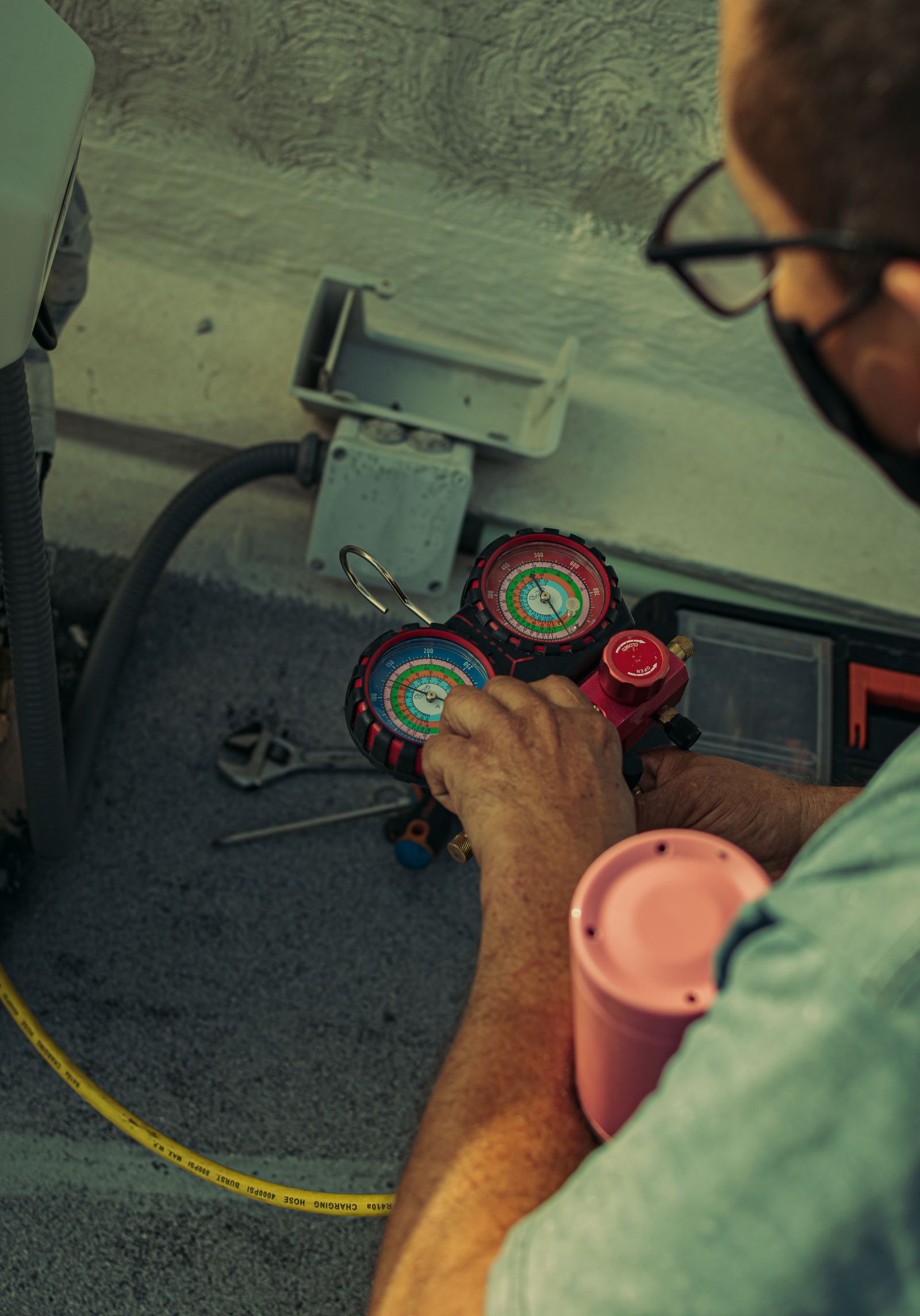
Summer is the hardest season on an air conditioner in Fort Pierce. Heat and humidity push the system to run for long hours without a break. The most common causes of summer breakdowns are a weak capacitor, dirty coils, low refrigerant, and a clogged condensate drain.
Why Summer Puts So Much Strain on Your AC
Your AC removes heat from your home and moves it outside. On a hot day, the system works much harder than it does in spring or fall. Humid air adds more work, because the system must pull moisture out of the air too. Parts that were already weak can fail when the load peaks.
This is why many AC calls spike in the hottest weeks. A system that runs fine in May may struggle in July. Small problems turn into full breakdowns when the outdoor temperature climbs and stays high for days.
Weak or Failing Capacitors
The capacitor gives the compressor and the outdoor fan a strong start. It stores electrical charge and releases it when the motor needs a push. Capacitors wear out over time, and heat speeds that wear. A weak capacitor may cause the outdoor unit to hum without starting, or to start and stop over and over.
If your AC will not start on a hot afternoon, a bad capacitor is a likely cause. Do not try to replace it yourself. The capacitor holds a charge even when the power is off. A trained technician can test it safely and replace it if needed.
Dirty Coils and Clogged Filters
Air flows through the indoor coil and the outdoor coil. When either coil is dirty, heat transfer slows down. The system runs longer and gets hotter. A dirty air filter has a similar effect. It limits airflow to the indoor coil, which can cause the coil to freeze.
Check your air filter every month during the summer. Replace it when it looks dirty or when the airflow feels weak. Keep the area around the outdoor unit clear of leaves, grass clippings, and debris. Plants and shrubs should stay back from the unit so air can move freely.
Low Refrigerant and Refrigerant Leaks
Refrigerant is the fluid that carries heat out of your home. Your system is sealed, so refrigerant should not run low over time. If the level drops, there is a leak somewhere in the system. Low refrigerant reduces cooling and can damage the compressor if it goes on too long.
Signs of low refrigerant include warm air from the vents, ice on the copper lines, and long run times that never reach the set temperature. Adding refrigerant without fixing the leak is not a lasting repair. A technician should find the leak, repair it, and then recharge the system to the correct level.
A Clogged Condensate Drain
As your AC cools the air, it pulls moisture out. That water drains through a small pipe called the condensate line. In humid Florida weather, that line can clog with algae and dust. When it clogs, water can back up into the drain pan and trigger a safety shutoff. Many homeowners notice water near the indoor unit or a musty smell.
You can help prevent this. Pour a cup of distilled white vinegar into the drain access point every few months. Check the drain pan for standing water. If the problem keeps coming back, have a technician clear the line and check the drain pan.
Thermostat and Settings Problems
Sometimes the fix is simple. A thermostat with dying batteries can send the wrong signal. A setting that runs the fan on all the time may keep the coils wet. Make sure the thermostat is set to cool and the set point is reasonable. Avoid setting it far below the outside temperature, which makes the system run nonstop.
Warning Signs to Watch For
- The air is not as cold as it used to be.
- The system runs for long periods without cycling off.
- The outdoor unit makes new buzzing, clicking, or grinding sounds.
- Water leaks near the indoor unit or drain line.
- Your power bill rises without a clear reason.
- The breaker trips when the system starts.
If you notice one or more of these signs, do not wait for a full breakdown. Turn the system off if you notice burning smells, smoke, or sparks. Then call for service. Early attention gives you more time to plan than a sudden failure on the hottest day of the year.
How to Prevent Summer Breakdowns in Fort Pierce
Regular maintenance is the best defense. A tune-up before the hot season checks the capacitor, the coils, the refrigerant level, the electrical connections, and the drain line. Good airflow and clean filters keep the system running at its best. A technician can also spot wear before it causes a failure.
Homes near the coast face extra wear from salt air and humidity. Outdoor units in these areas may need more frequent cleaning. Ask your technician how often your system should be serviced based on its age and location.
Why Fast Repair Matters in Fort Pierce
A broken AC is more than an inconvenience in Florida summers. Indoor temperatures can climb fast, especially in the afternoon. Older adults, young children, and pets can struggle in the heat. Quick diagnosis helps you get cool air back sooner and avoid extra damage to the system.
CoolWave offers 24-hour service for residential and commercial customers. Our team can help you sort out which of these causes fits your system. You can learn more about our services on our AC repair page. If you are in the area, our Fort Pierce service area page has more details about the homes and businesses we serve.
Is your AC struggling in the heat? CoolWave is based in Palm Bay, FL, and serves Brevard, Indian River and St. Lucie counties, including Fort Pierce, Vero Beach, Sebastian, and Port St. Lucie. Call 888-922-8966 today. Our team can help you find the cause, make a plan, and get your home cool again. Call for an estimate.
Frequently Asked Questions
Why does my AC stop working on the hottest days?
Heat and humidity add strain to the system. Weak parts, such as a capacitor or a low refrigerant level, often fail when the load is highest.
Can I fix a bad capacitor myself?
No. Capacitors can hold a charge even when the power is off. A trained technician should test and replace it safely.
How often should I change my AC filter in summer?
Check the filter every month during the hot season. Replace it when it looks dirty or when airflow feels weak.
What should I do if my AC is blowing warm air?
Turn the system off to prevent more damage, check the thermostat and filter, and call for service. Low refrigerant usually means a leak that needs repair.