
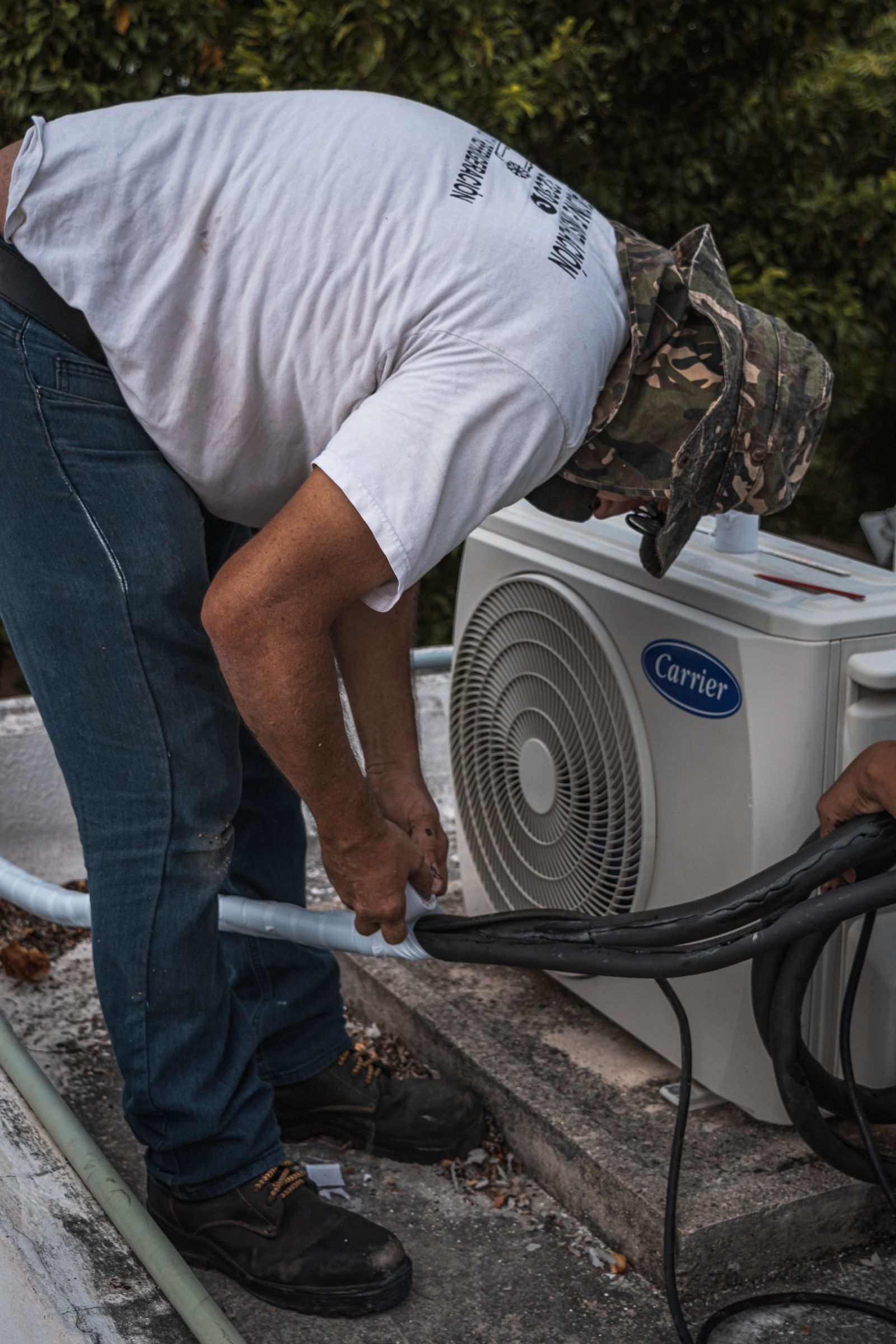
A clogged AC drain line usually causes water to leak near the indoor air handler or on the ceiling below it. The drain line carries condensation away from your system, and algae or debris can block it. Shut the system off, check the drain, and call a technician if the clog or leak keeps coming back.
What the AC Drain Line Does
When your air conditioner cools the air, it pulls moisture out of the air. That water collects in a drain pan under the indoor unit. A small pipe, called the condensate drain line, carries the water out of the home. In a Florida home, that line can work hard for most of the year.
Why Drain Lines Clog in Florida
Warm, humid air is a perfect setting for algae and mold. The drain line is dark, damp and often warm. Over time, a slimy buildup forms inside the pipe. Dust, pet hair and small debris can stick to that buildup. Eventually the water has nowhere to go. Long summers mean the system runs for many hours each day, so the drain line carries more water with every cycle. That steady flow makes a small buildup show up sooner.
Clogs often start at low spots in the pipe or near the access point. Some lines drain outside through a short run of pipe, and bugs or dirt can get in there too. Once water backs up, it can overflow the drain pan and spill onto the floor or into the walls.
Signs Your Drain Line Is Clogged
Watch for these common warning signs:
- Water dripping or pooling near the indoor air handler or furnace closet
- Water stains or bubbling paint on a ceiling or wall near the unit
- A musty smell coming from the vents
- An AC system that runs but does not cool well
- A system that shuts off on its own
Why the AC May Shut Off
Some systems have a safety float switch in the drain pan. When water rises high enough, the float lifts and cuts power to the system. This protects your home from overflow damage. If your AC stopped suddenly, a clogged drain line is one possible cause. Check the pan for water before you restart anything.
What to Do Right Away
If you see water near your indoor unit, take these steps:
- Turn the system off at the thermostat.
- Look for standing water around the indoor unit and in the drain pan.
- Mop up water so it does not reach flooring or drywall.
- Check the drain line outlet for water flow and debris.
- Do not restart the system until the drain is clear and the pan is dry.
Keep notes on what you see. Write down when the water appeared, how much there was, and whether the system was running. This helps a technician find the cause faster when they arrive. Photos of the drain pan or the stains can also help you describe the problem over the phone. Note whether the water looks clear or cloudy, and whether it smells sour. Those details can point to algae growth or to a blockage farther down the line.
If you are unsure how to reach the drain line, or if the unit sits in a tight space, leave the work to a technician. Electrical parts sit close to the water. Safety comes first.
Cleaning the Drain Line
Some homeowners flush the line with a cleaner made for AC drains or a small amount of diluted white vinegar. Check your system manual before you pour anything in. Harsh chemicals can damage parts or cause problems later. If the clog is deep or keeps coming back, it is time to call a pro.
How Regular Maintenance Prevents Drain Clogs
A tune-up is one of the best ways to catch drain problems early. During a visit, a technician can check the drain pan, clear the line, and look for algae or buildup. Technicians also check the float switch and overall airflow. Our AC maintenance and tune-ups include a close look at the drain path, so small problems get caught before they turn into leaks.
Keeping the area around the indoor unit clean helps too. Dust and pet hair can flow into the drain line and build up over time. Clean filters and good airflow keep the system working well and reduce the load on the drain. Ask us what schedule fits your system, since a home with heavy use may need more frequent visits.
When to Call CoolWave
Call a pro if the water keeps returning, if you see mold, or if the system will not restart. A technician can find the cause and repair the problem. A drain issue can also point to larger system faults, such as a weak airflow or a frozen coil. If that is the case, our AC repair service can look at the full system and explain your options in plain language.
Need help with a clogged drain line in Palm Bay, Melbourne, Vero Beach, Sebastian or Port St. Lucie? CoolWave is based in Palm Bay and offers 24-hour service across Brevard, Indian River and St. Lucie counties. Call 888-922-8966 for an estimate.
Frequently Asked Questions
What causes a clogged AC drain line?
Algae, mold, dust and small debris build up inside the drain line. Warm, humid air in Florida helps algae grow, so the line can clog over time.
Can a clogged drain line shut off my AC?
Yes. Some systems have a safety float switch in the drain pan. When water rises too high, the switch cuts power to the system to prevent overflow damage.
Can I clear a clogged AC drain line myself?
Some homeowners flush the line with a cleaner made for AC drains. Check your system manual first. If the clog is deep or keeps returning, call a technician.
How do I prevent AC drain line clogs?
Schedule regular maintenance, keep the area around the indoor unit clean, and keep air filters clean. A technician can also check the drain pan and line during a tune-up.