
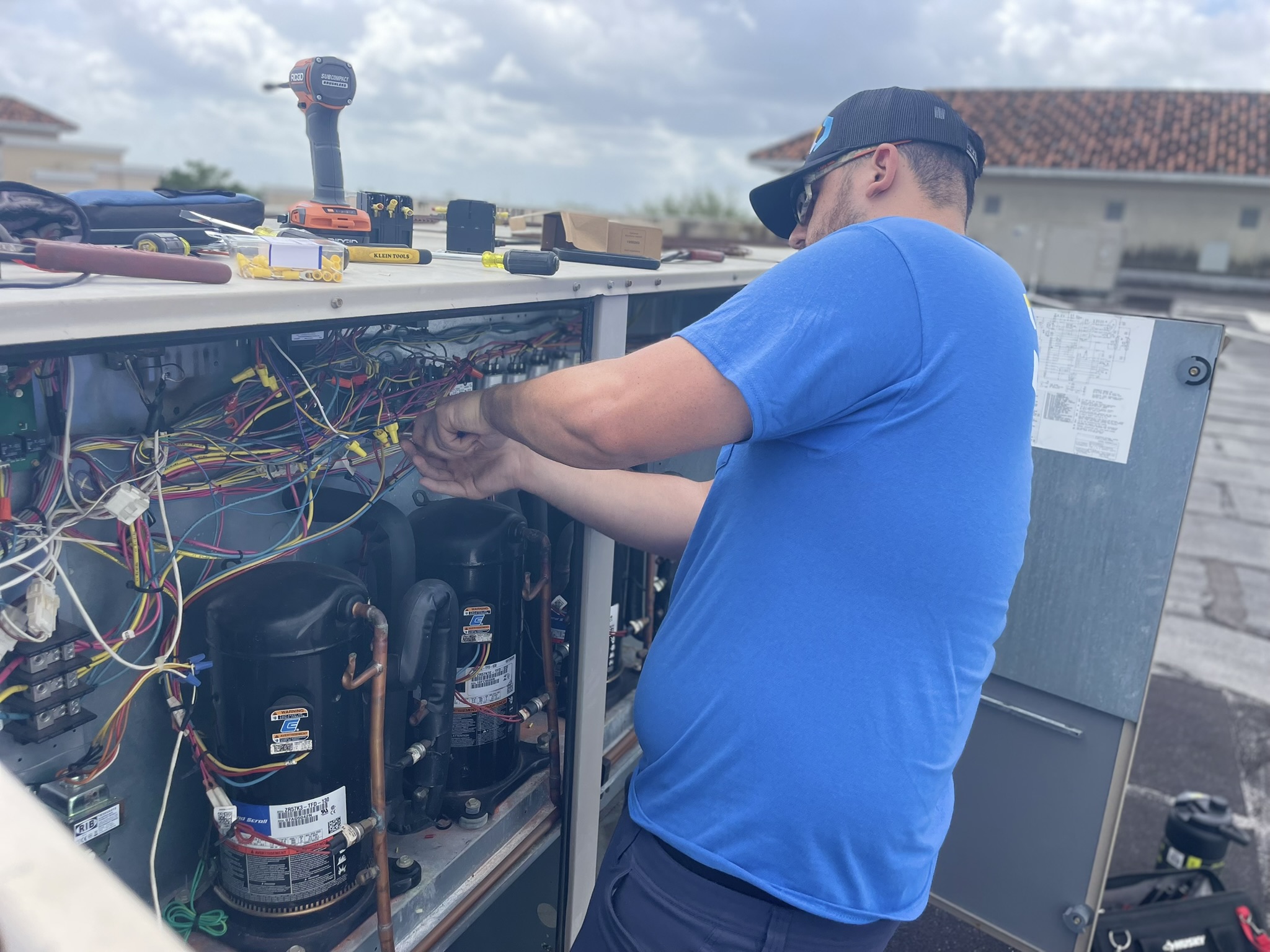
A ductless mini-split is a heat pump system that cools and heats one room or zone without a duct system. It works well in Sebastian homes where ductwork is missing, short, or hard to reach. Many homeowners choose a mini-split for an addition, a garage, or a bonus room over the garage.
Where a Ductless Mini-Split Fits Best
Ductless systems are a good match when a space is hard to cool with the main system. Think about a room that sits at the end of a long duct run, or an addition built after the original air handler was sized. A mini-split can serve that space on its own, without pushing more air through old ducts.
Garages and workshops are another common fit. These spaces often have no ducts at all. A single indoor unit on a wall can keep the area comfortable enough for projects, storage, or a home office. For homes with a pool, a mini-split can also cool a nearby room, such as a family room that gets hot in the afternoon.
Ductless systems also work well for commercial spaces with a small footprint. A back office, a storage room, or a small retail space may only need one or two indoor heads. Ask whether your space is a good match before you plan the layout.
How Many Indoor Units Do You Need?
Most mini-split systems use one outdoor unit that connects to one or more indoor units. A single-zone system serves one room. A multi-zone system serves several rooms from one outdoor unit. The right choice depends on the size of each room, how many rooms you want to cool, and how the rooms are used.
Do not guess at capacity. A room with large windows, a dark roof, or heavy daily sun needs more cooling than a shaded room on the north side. A proper load check looks at these factors and sizes the system to match. Oversized or undersized equipment can run poorly and wear out faster.
What a Typical Installation Involves
Every home is different, but most mini-split installs follow the same general steps. The crew first checks the site. They look at the wall for the indoor unit, the outdoor pad location, and the path for the line set. They also confirm the electrical supply and the drain route for condensate water.
Next, the indoor unit is mounted high on an interior wall. The crew then runs a small hole through the exterior wall for the refrigerant lines, power, and control wires. The line set is bundled and sealed so water and pests stay out. The outdoor unit sits on a level pad or wall bracket, with clearance for airflow and service access.
Once everything is connected, the system is charged and checked. Technicians test the refrigerant circuit for leaks, make sure the drain flows freely, and confirm the system runs in both cooling and heating modes. A short walkthrough at the end shows you how to use the remote, set schedules, and clean the filters.
Choosing a Good Location for Each Unit
The indoor head should sit where air can reach the whole room. Avoid spots directly above a bed or a desk where the airflow feels harsh. Keep the unit clear of tall furniture and curtains. Good placement helps the room feel even and keeps the system running smoothly.
The outdoor unit needs clean airflow and a stable base. Keep it away from walls, shrubs, and areas where leaves or lawn debris collect. In coastal areas, a spot with some shade and protection from salt spray can help the unit last longer. Ask the installer how they plan to secure the unit against wind.
Maintenance After Installation
Mini-splits need less upkeep than many older systems, but they still need care. Clean or replace the indoor filters on a regular schedule. Keep the outdoor unit free of leaves and debris. Check that the drain line stays clear, since a clogged drain can cause leaks and mold.
A yearly tune-up helps catch small problems early. A technician can check refrigerant levels, clean the coils, and look for worn parts. Regular checks keep the system comfortable and help it run the way it was designed to run.
Ductless Mini-Splits for Sebastian and Nearby Towns
CoolWave is based in Palm Bay, FL, and serves Brevard, Indian River, and St. Lucie counties. We help homeowners in Sebastian with ductless mini-split installation and service. We also work with homes and businesses in Vero Beach, Melbourne, Port St. Lucie, and Fort Pierce.
Our team handles residential and commercial service. We offer 24-hour service for urgent cooling problems. If your home is in Sebastian and you have a room that never seems to cool, a ductless system may be the right fix. You can read more about our work in Sebastian.
Next Steps for Your Home
Start by noting which rooms are hard to cool or heat. Write down how the rooms are used and when they get the most sun. Take a few photos of the walls and the area outside where the outdoor unit would sit. This information helps the technician plan a better layout.
If you want a ductless mini-split for an addition, garage, or problem room, our ductless mini-split team can review the space with you. We will explain the options and the install steps in plain terms.
Call CoolWave at 888-922-8966 for an estimate on a ductless mini-split in Sebastian. Tell us about the room, the layout, and your comfort goals. We will help you pick the setup that fits your home and your budget.
Frequently Asked Questions
What is a ductless mini-split?
A ductless mini-split is a heat pump system that heats and cools one room or zone without ducts. It has an outdoor unit and one or more indoor units mounted on the wall.
Is a mini-split a good choice for a garage?
Yes. Garages often have no ducts, so a mini-split can keep the space comfortable for projects, storage, or a home office. A technician can confirm the best size and layout.
How long does a mini-split installation take?
Timing depends on the home and the number of indoor units. A typical install includes a site check, mounting the indoor unit, running the lines, setting the outdoor unit, and a system test.
How do I keep a ductless system running well?
Clean the indoor filters on a regular schedule, keep the outdoor unit clear of debris, and check that the drain line stays open. A yearly tune-up helps catch small problems early.