
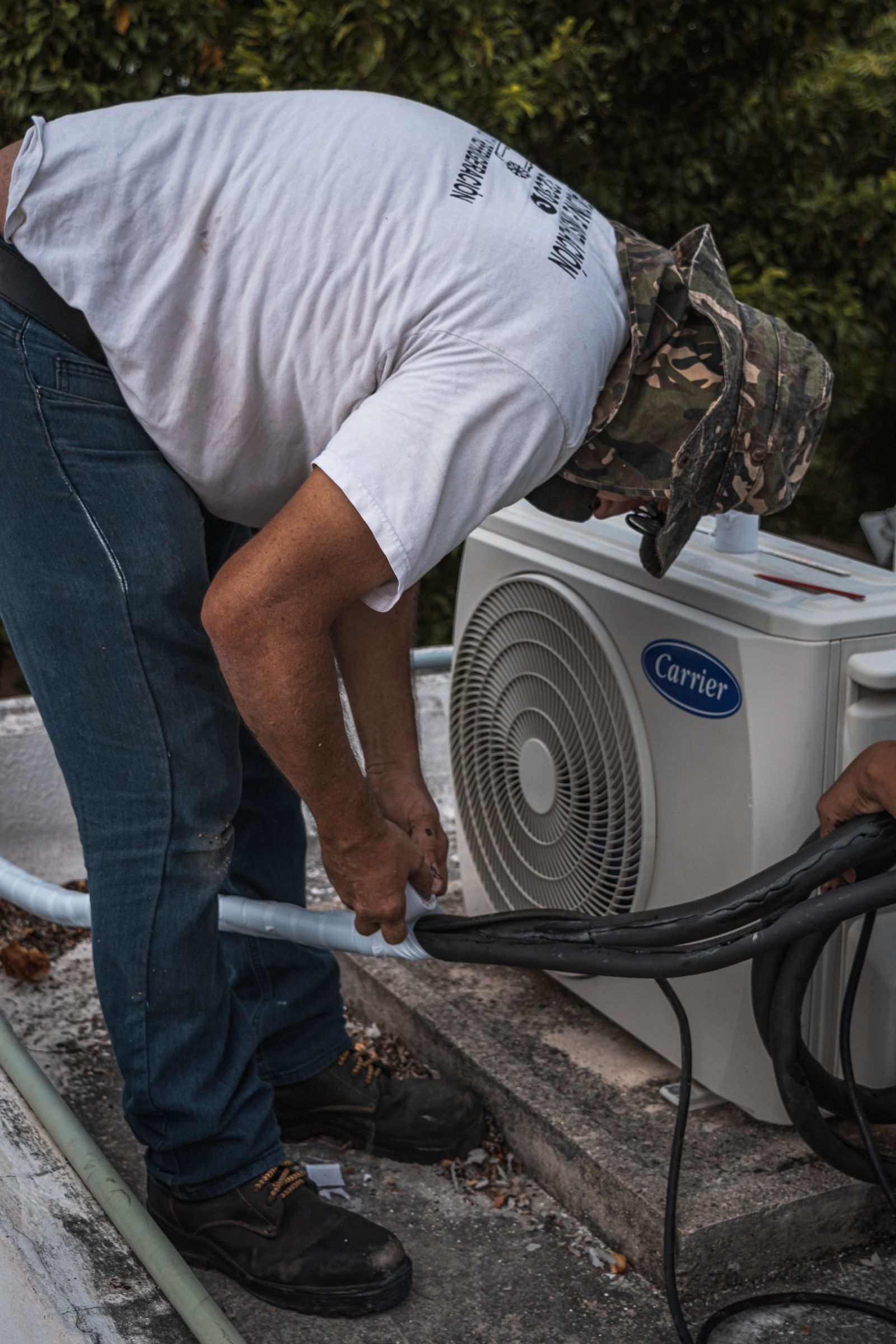
How Does Salt Air Damage an Air Conditioner?
Every outdoor AC unit along the Space Coast sits in the path of salt-laden air blowing in off the Atlantic. Fine salt particles settle on the condenser coil, the metal fins, and the cabinet, and once they're there they hold moisture against the metal instead of letting it evaporate. That combination — salt plus trapped moisture — is what corrosion technicians call pitting corrosion: small, chalky-white pockets that eat into copper lines and aluminum fins from the outside in.
The damage isn't cosmetic. A corroded coil transfers heat less efficiently, which forces the compressor to run longer to hit the same temperature. Corrosion can also reach electrical connections and the control board, turning a coil problem into a shorted-out unit. None of this happens overnight, but on an unprotected system close to the water it can start within months, not years.
How Much Shorter Is an AC Unit's Lifespan Near the Coast?
Inland Florida systems typically run 10 to 15 years with regular maintenance. Move that same system within a mile or two of the ocean and, without extra protection, that range commonly drops to 7 to 12 years — and units sitting right on the waterfront can fail even sooner. The units themselves aren't lower quality; they're simply fighting a harder environment every single day they run, and in Florida that's most of the year.
The good news is that this isn't a fixed outcome. Homes that rinse their outdoor unit regularly and keep up with professional maintenance routinely get the same 12 to 15 years coastal residents further inland expect — the gap is almost entirely a maintenance gap, not an equipment gap.
How Often Should You Rinse Your Outdoor Unit?
For a home within a mile or two of the water, a gentle garden-hose rinse every 2 to 4 weeks keeps salt from bonding to the coil before it has a chance to start corroding. Homes a bit further inland can usually stretch that to once a month. Rinse from the top down and from the inside of the coil outward where the fins allow it, and always use fresh water on a standard hose setting — never a pressure washer, which can bend the thin fins and drive water into places it doesn't belong.
It's a five-minute habit, but it's the single most effective thing a homeowner can do between professional visits.
What Other Steps Protect a Coastal AC System?
- Corrosion-resistant coatings. An epoxy or polyurethane coil coating acts as a barrier between bare metal and salt air, and it's worth asking about at your next tune-up if your unit doesn't already have one.
- Smart placement. Where possible, position the outdoor unit away from direct onshore wind, or use fencing or landscaping as a windbreak — as long as it doesn't block the airflow the unit needs to run efficiently.
- Routine professional service. A technician can spot early pitting on the coil, check that electrical connections are still corrosion-free, and catch a slow refrigerant leak caused by a pinhole in a corroded line before it becomes a full breakdown.
- Choosing coastal-rated equipment at replacement time. If you're due for a new system, ask specifically about coated coils and weather-resistant cabinets built for salt-air environments.
What Does Salt Corrosion Actually Look Like?
Most homeowners never look closely at the outdoor unit until something's wrong, so it helps to know what to check for. A chalky white powder on the coil fins, especially around the base or the copper joints, is the clearest sign salt has started reacting with the metal. Tiny pinholes in the copper refrigerant lines — sometimes invisible until a technician pressure-tests the system — are the more expensive version of the same problem, since a leak there means a slow loss of refrigerant and reduced cooling long before the unit fails outright. Rust streaking down the cabinet or a fan motor that's started making a new noise are both worth a call before they become an emergency one.
Recommendation: What We'd Tell a Space Coast Homeowner
If your home is within a mile or two of the water — which covers a lot of Palm Bay, Melbourne Beach, and the barrier-island communities across Brevard, Indian River, and St. Lucie counties — treat the monthly rinse as non-negotiable and pair it with a professional AC maintenance visit on a regular schedule rather than waiting for a problem to show up. If your current unit is already showing chalky white residue or visible pitting on the coil, that's worth a look before it turns into a repair call or, depending on the unit's age, a bigger decision about whether repair still makes sense. We cover exactly that decision in our guide to repairing vs. replacing an aging AC system.
Frequently Asked Questions
Does salt air damage air conditioning systems near the coast?
Yes. Salt particles settle on the outdoor unit's coils, fins, and cabinet and form a corrosive layer that eats into metal surfaces, often starting within months on an unprotected unit close to the water.
How often should I rinse my outdoor AC unit?
For homes within a mile or two of the coast, rinse the outdoor unit with a garden hose every 2 to 4 weeks. Homes further inland can typically stretch that to once a month.
Can I use a pressure washer on my AC unit?
No. A pressure washer can bend the thin aluminum fins on the coil and force water into electrical components. Use a standard garden hose on a gentle setting instead, rinsing from the inside out where possible.
How much shorter is an AC unit's lifespan near the ocean?
Coastal units commonly run 7 to 12 years versus 10 to 15+ years for a well-maintained inland system, though this varies with distance from the water and how consistently the unit is rinsed and serviced.
Are corrosion-resistant AC units worth it for Space Coast homes?
For homes within a mile or two of the water, yes. Coated coils and weather-resistant cabinets cost more upfront but are built specifically to slow the pitting corrosion that salt air causes.