
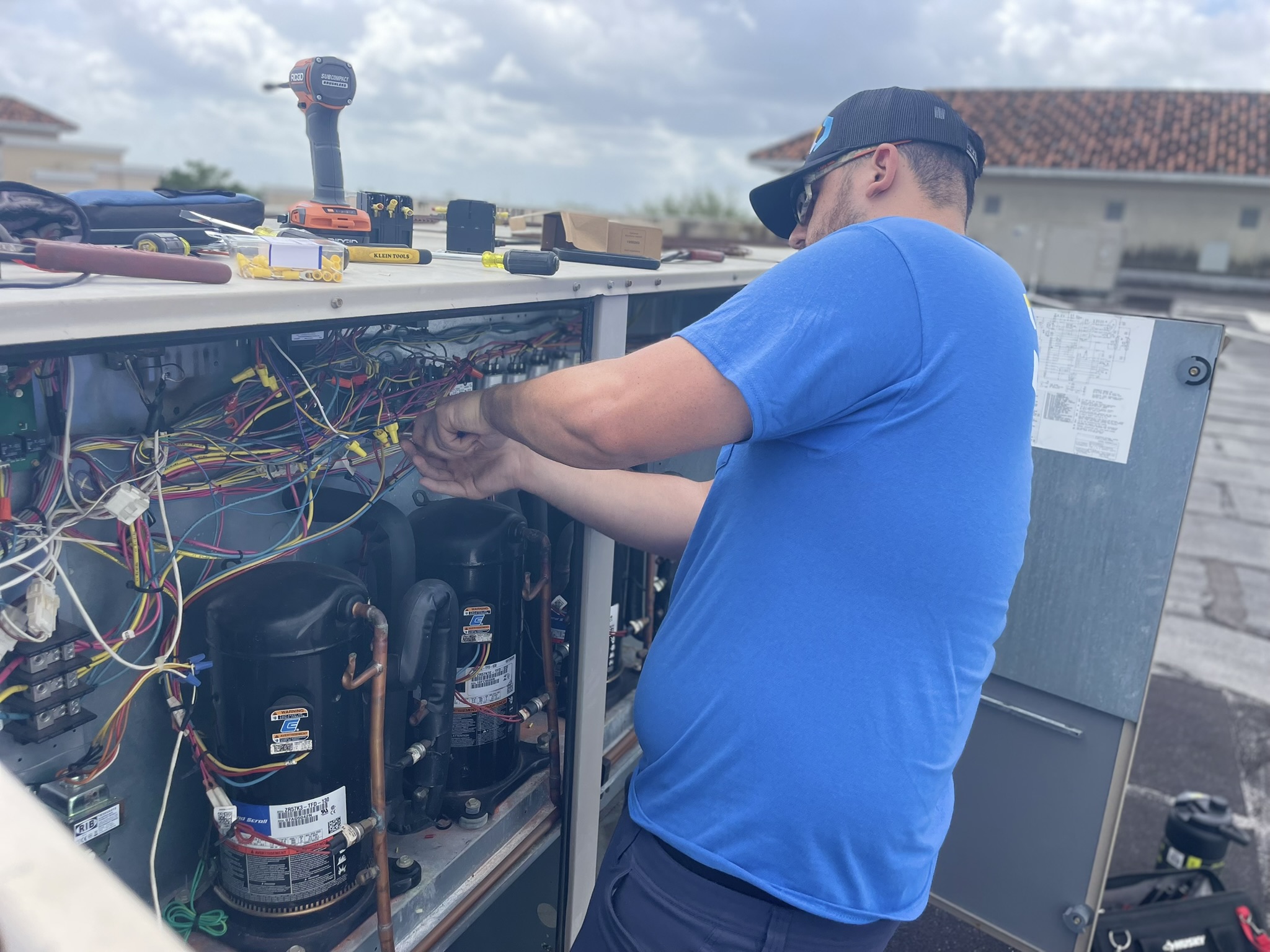
Why Can Two Florida Homes Get Very Different Quotes for a New AC?
Two houses on the same street can need very different equipment. A new central air system is sized and priced around the specific home: how much cooling it needs, how efficient the new unit should be, what the existing ductwork and air handler can support, and what the local code requires at installation. The coastal setting matters too, because salt air and humidity affect which equipment holds up well and how long it lasts. That means a price from a neighbor's job or an online average tells you very little about your own home. Seven factors do most of the work, and they are listed below.
What Are the 7 Things That Move the Price of a New AC?
- System size (tonnage). Cooling capacity is measured in tons. A larger home or one with more heat gain needs a larger unit, and bigger equipment costs more to buy and install. Size should come from a load calculation, not a rule of thumb.
- Efficiency (SEER2). Higher-rated units use less electricity per unit of cooling and cost more up front. The right level depends on how many hours the home runs the AC. Our SEER rating guide for Florida explains the minimums and the trade-off.
- Air handler and ductwork. Some replacements can reuse the indoor air handler and ducts, and some need them replaced to match the new system. Leaky or undersized ducts can cut into the performance you are paying for, so a complete quote checks them.
- Permits and code items. Replacement work typically involves permits, an electrical disconnect and, in Florida, often outdoor hardware such as a pad and tie-down straps. What your home needs depends on the equipment and the local code, so each item should appear on the quote.
- Electrical and connection work. A new system may need a circuit, breaker or wiring change to meet its electrical requirements. Older homes are more likely to need this, and it should show up as its own line on the quote.
- Coastal exposure. Homes near the water face salt air, which corrodes outdoor coils and cabinets. Corrosion-resistant options and coastal installation details can add to the price and may extend the life of the equipment. See our salt air protection guide.
- Type of system. A central system with ducts is priced differently from a ductless mini-split. For an addition or a space without existing ductwork, a ductless mini-split can be the more practical route, and the comparison depends on the room and the home.
How Does Tonnage Change the Cost of a New AC?
Tonnage describes how much heat a system can remove from the home per hour, and it is the first number a contractor should settle. Each added ton means more equipment, more refrigerant and often a larger air handler and duct connection. That is why a 3-ton system is priced differently from a 4-ton system. The number should come from a room-by-room load calculation that accounts for windows, insulation, roof exposure and how many people live in the home. Oversizing is not a safe shortcut either. A unit that is too large cycles on and off too often, which weakens humidity removal in a climate as humid as Florida's.
How Much Does SEER2 Matter to the Price?
Efficiency is the second big lever. Units with higher SEER2 ratings cost more to buy because they usually use larger coils, more advanced compressors and better controls. Whether that premium pays off depends on run hours. A household that cools for most of the year on the Space Coast has more opportunity to recover the extra cost than a home that rarely runs its AC. Compare the efficiency tiers on your quote against the energy use you expect, not against the highest number available. The SEER rating guide covers the minimum for new systems in Florida and how to read the tiers.
Does Replacing Ductwork or the Air Handler Add to the Cost?
It can. A new outdoor condenser is often matched to the existing indoor coil and air handler, but not always. Mismatched components can reduce efficiency or cause airflow problems, so when a major indoor part is old, a technician may recommend replacing it at the same time. Ask the contractor to state, line by line, what is being reused and what is being replaced. If ducts are leaking, they waste conditioned air, and repairing them belongs in the comparison. Our guide to repairing versus replacing an AC in Florida helps you decide whether the rest of the system is worth keeping.
What About Permits, the Hurricane Pad and Electrical Work?
These items are easy to overlook, so ask about them early. Replacement work usually requires a permit, and a licensed contractor can confirm which permits your job needs with the local building department. Florida installs often include outdoor hardware such as a pad and tie-down straps, along with an electrical disconnect at the outdoor unit. Which of these your home needs depends on the equipment and the code, so the answer belongs on your written quote. If an estimate leaves out permits or the electrical scope, ask for them to be added before you compare prices.
Does a Coastal Location Change What Gets Installed?
It can. Homes within reach of salt air often benefit from corrosion-resistant equipment choices and better protection for outdoor components. These choices can add to the price, but they can also extend the life of the system and reduce corrosion repairs later. The trade-off is worth raising with your installer rather than assuming the standard setup is right for the location. For more on protecting a coastal home's system, read does salt air damage your AC.
Is a Ductless Mini-Split Cheaper for an Addition?
Sometimes it is the better fit, but not because it is always less expensive. A ductless mini-split avoids new ductwork, which makes it a practical choice for a garage, a sunroom or a bedroom addition. Whether the total cost comes out lower depends on how many zones you need and what the home already has in place. Our mini-split guide walks through when the option makes sense, and the ductless mini-split service page describes the installation and service work CoolWave performs.
What Should a Written AC Quote Include?
A real number comes from an in-home visit and a written quote. Before you compare, ask any contractor, including CoolWave, to put the following in writing: the tonnage and how it was calculated, the efficiency tier and the reason for it, what is reused and what is replaced, and every permit, electrical item and outdoor hardware line. Comparing quotes on the same scope tells you far more than comparing headline totals.
What We Recommend Before You Compare New AC Prices
- Ask for a load calculation that sets the tonnage.
- Request the efficiency tier and the reason it fits your home's use.
- Check what is reused and what is replaced, including ductwork and the air handler.
- Confirm permits, the disconnect and any outdoor hardware are on the quote.
- Compare quotes line by line, not by the total alone.
If your current system still runs but needs frequent repairs, a maintenance and diagnostic visit is a practical first step to see what is worth fixing and what is not. When you are ready to plan an installation, see CoolWave's AC installation service.
Frequently Asked Questions
Why is a 3-ton unit priced differently from a 4-ton?
A 4-ton system has more cooling capacity, so it needs more equipment and usually more matching components. The right tonnage comes from a load calculation for the specific home, not from a square-footage rule.
Is a permit required to replace an AC in Brevard County?
A licensed contractor can confirm which permits your job needs with the local building department. Make sure the written quote lists them.
Does a higher SEER2 rating always save money?
Not always. The savings depend on how many hours the system runs. A higher rating costs more up front, so the payback depends on how much you use the AC.
Should I repair or replace my AC first?
That depends on the age, repair history and condition of the system. Our repair-versus-replace guide walks through the decision, and a diagnostic visit gives you the facts to make it.